Cave Rehabilitation
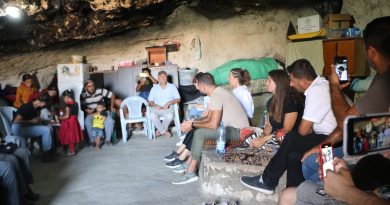
One of the most important features of the archaeological area of Masafer Yatta is the caves, or as the local residents call them, “Tayaran.” Many families still live in these caves. More than 200 inhabited caves have been documented in several communities such as Al-Mufaqarah, Maghayir Al-Abeed, Al-Markaz, Al-Halawa, Jinba, and Sfai Al-Fouqa and Al-Tahta. According to documentation, there are also more than 500 uninhabited caves in Masafer Yatta
During the interviews we conducted, we found that local residents do not usually call the cave “kahf” or “maghara” as is common in Palestine. Instead, they call it “Tour.” The reason, as many interviewees explained, is that the word Tour conveys strength and protection, while maghara suggests something made of stone and associated with weakness
Hajjeh Nuzha Al-Najjar from Maghayir Al-Abeed says
“The Tour is more pleasant and stronger than the maghara, even though the name Maghayir Al-Abeed contains the word ‘maghayir’ because slaves once lived there, so the name of the caves became associated with them.”
Through field surveys and interviews with elders, it was also found that caves are concentrated in the Masafer area inhabited by farmers from the town of Yatta, and that the cave is an essential part of their cultural heritage. It also became clear that caves in the eastern part of Masafer Yatta, where Bedouin communities displaced from Beersheba in 1948 live, are far fewer than in the western part of the area. This confirms that caves are primarily part of the farmers’ heritage, rather than the Bedouin heritage, as Bedouins traditionally live in tents made of animal hair, not in the plastic tents often provided by many national and international organizations
To learn more, click here